
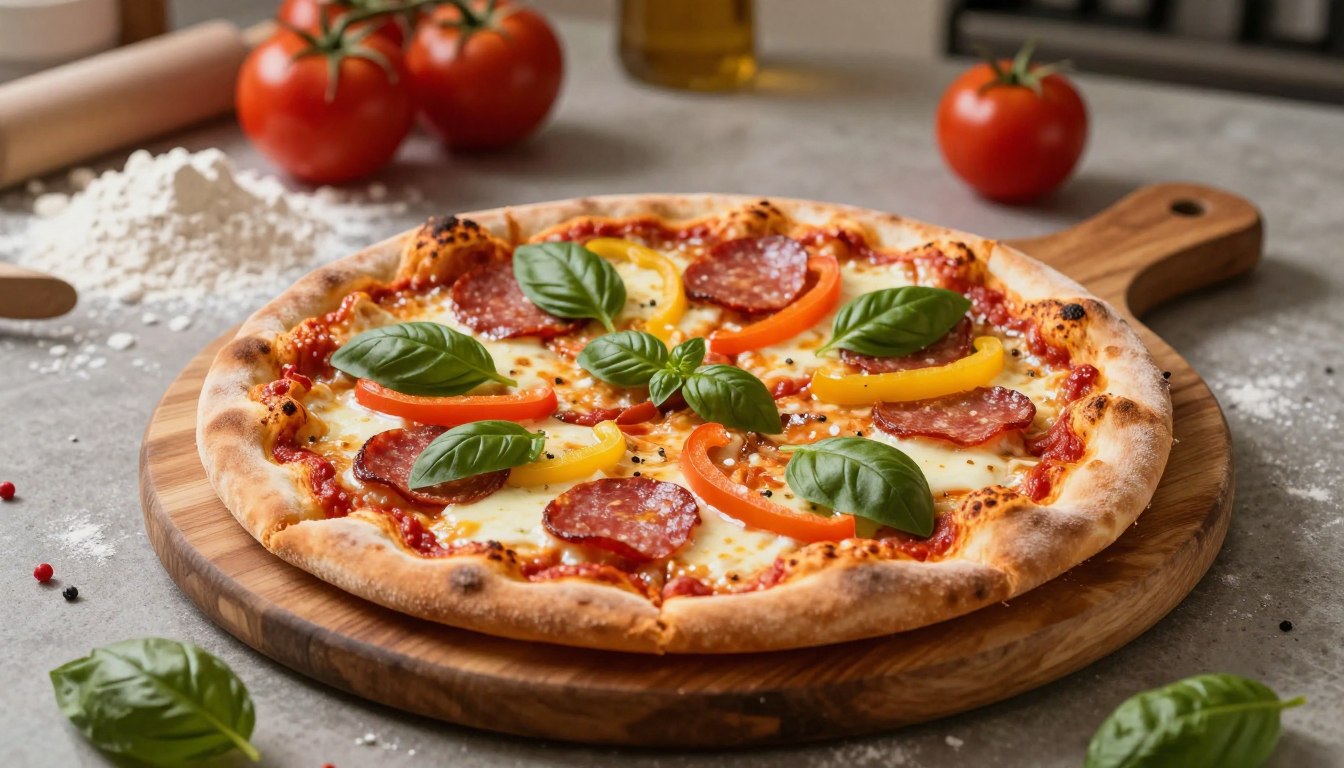
Welcome to the ultimate guide for making restaurant-quality pies in your own kitchen. This section sets simple expectations: reliable methods, not fussy rules, so you can cook with confidence.
Great homemade results mean a consistent crust, balanced sauce, proper cheese melt, and toppings that cook evenly. We explain how small choices—hydration, bake surface, and topping moisture—change outcomes for this classic Italian dish.
Read on to jump to the part you need: dough, sauce and cheese, heat and tools, toppings, styles, and workflow. We also promise practical troubleshooting to fix soggy centers, pale crusts, or burnt cheese.
If you can make a sheet-pan dinner at home, you can make a great pie. This guide blends clear technique, useful tips, and approachable content so weeknight meals and weekend projects both shine. Expect a wide variety of finishes from the same simple base.
Key Takeaways
- Follow reliable methods over rigid rules to get consistent results.
- Focus on crust, sauce balance, cheese melt, and even toppings.
- Small choices like hydration and bake surface change outcomes.
- Sections cover dough, sauce/cheese, heat/tools, toppings, and workflow.
- Troubleshooting tips help fix common problems quickly.
Why Homemade Pizza Still Wins for Weeknight Meals and Weekends
At its heart, a great pie is built from four simple things done well. Dough, sauce, cheese, and high heat form the framework that matters more than secret ingredients.
What makes a pie work
- Dough: structure and texture come from hydration and handling.
- Sauce: balance acidity and salt so it complements, not soaks.
- Cheese: melt, moisture control, and layering.
- Heat: high, fast bakes create char and a light crumb.
A quick history snapshot
The word “pizza” appears as early as 997 AD in Gaeta. Naples refined the style, and in 1905 Lombardi’s opened in New York, helping the dish become mainstream in america pizza culture.
Today’s value and convenience
Delivery apps added convenience but also fees, broadening competition across the food industry. In 2024, sales from pizza chains show the market shift—and a near-$20 pie can feel pricey when tips and add-ons arrive.
Making pies at home is a smart value play. Batch dough, plan a simple menu, and you can match or beat chain deals while giving customers at your table exactly what they want.
Pizza Dough and Crust Basics for the Home Oven
Start with a clear crust plan: the style you pick sets the rest of the bake.
Choose a crust that matches your oven and meal. Thin and crisp heats fast on a stone. Thicker and chewy benefits from a bit more bake time. Pan-style gives a crunchy edge and a tender interior. New York–style is thin but foldable for easy slices.
Proofing and fermentation develop flavor and structure over time. Short warm proofs yield quick dough; cold, long fermentation builds depth and stretch. Use cold-proofing to fit busy schedules and improve extensibility.
Shaping and cornicione goals
- Rest dough if it snaps back; relaxed gluten stretches without tearing.
- Press gases toward the edge to build an airy cornicione and avoid a dense rim.
- A rolling pin is fine for cracker-thin styles; hand-stretch for bubbled character.
Common mistakes and quick fixes
- Dough too sticky: add light flour and a short rest.
- Dense crust: increase fermentation time or lower hydration slightly.
- Pale bottom: preheat a stone to reproduce brick-oven heat for a browned base.
Key terms: hydration = water ratio, proof = rise, fermentation = flavor development, cornicione = outer edge.
Sauce, Cheese, and Herbs That Make a Pie Taste Like a Pizzeria
Sauce choices steer the whole bake. A bright no-cook sauce highlights fresh tomato notes and works best with very short, high-heat bakes. A simmered sauce builds depth and sugar balance for longer cooks or thicker crusts.
Timing and texture tips
Keep sauce thickness moderate: strain watery tomatoes or add a splash of tomato paste to thicken. Too much water leads to a soggy center; too thick feels heavy.
Herbs, garlic, and finishing moves
Add raw garlic sparingly after baking or briefly sauté it if added before the oven. Oregano blooms in the heat; basil often tastes best when scattered on top after the pie cools. Finish with a drizzle of olive oil or a pinch of grated hard cheese for a restaurant touch.
Cheese choices and melt science
Mozzarella with moderate moisture gives stretch without excessive pooling. Use low-moisture for browning or fresh for softer melt—pat fresh balls dry first. Blend provolone, ricotta, pecorino, or gorgonzola in small ratios so flavors complement, not compete.
| Element | Best Use | Effect on Bake | Quick Tip |
|---|---|---|---|
| No-cook sauce | High-heat, short bakes | Bright, fresh flavor | Use canned San Marzano or well-drained fresh tomatoes |
| Simmered sauce | Longer bakes, thick crusts | Richer, deeper sweetness | Simmer 20–30 min, strain if too chunky |
| Mozzarella (low-moisture) | Browning and stretch | Good melt, less pooling | Shred cold for even coverage |
| Cheese blends | Complex flavor | Balanced aroma and texture | Limit strong cheeses to 10–20% of blend |
Heat, Tools, and Setup: Getting Brick Oven Results at Home
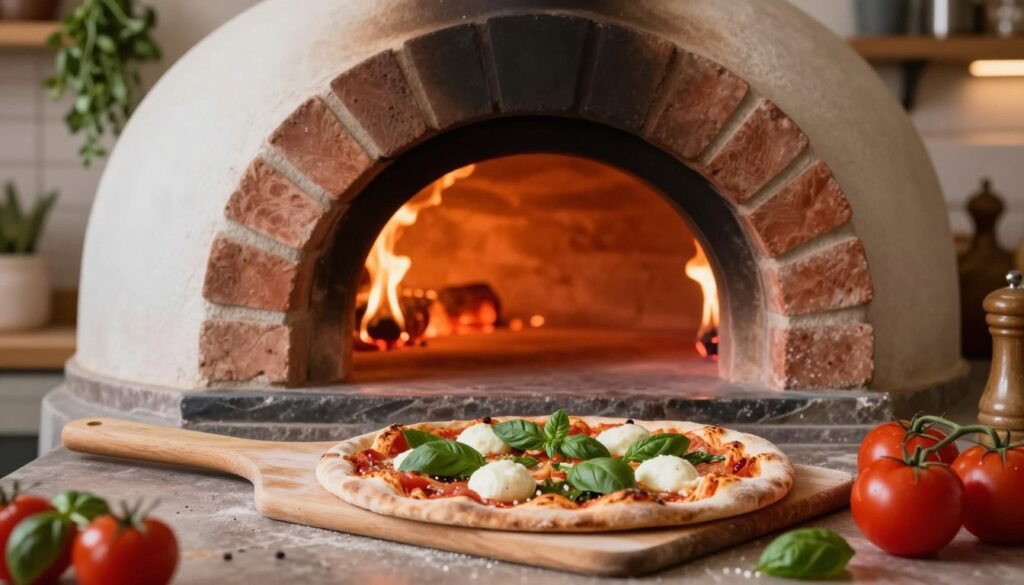
High and focused heat transforms a home oven into a near-brick-oven performer. Heat is the biggest separator between average and great baking. You can get closer with the right surface and a calm launch.
Stone vs. steel vs. pan
Stone stores heat and mimics a brick oven’s radiant bed. It gives even browning but heats more slowly.
Steel conducts faster and boosts oven spring and crispness quickly.
Pan keeps toppings supported and yields a softer interior with a crunchy edge for pan styles.
Launch, preheat, and placement
- Dust a peel with flour or cornmeal to avoid sticking; cornmeal also adds texture.
- Preheat stone or steel for 45–60 minutes at the highest oven setting; pans need 20–30 minutes.
- Place the surface on the lower-middle rack for a browned bottom; move up and broil briefly for top color.
| Issue | Likely Cause | First Fix |
|---|---|---|
| Scorched bottom | Surface too hot or too low | Raise rack one position or reduce preheat time |
| Pale base | Insufficient surface heat | Increase preheat to 45–60 min or use steel |
| Undercooked center | Too thick dough or cold toppings | Thin the dough or reduce wet toppings |
Grilled and outdoor ovens are worth the investment if you plan to replace frequent delivery and will use them often. Otherwise, a steel and a good preheat deliver tons of reliable home results.
Toppings That Work: From Classic Combos to Creative Options
Choose toppings that create contrast so each bite stays bright and clean.
Balance rule: manage moisture, fat, salt, and cook time. Pick one high-moisture ingredient, one fatty or salty element, and a few quick-cook accents. This keeps each slice flavorful without becoming soggy.
Meat best practices
Pre-cook loose sausage and drain. Crisp pepperoni on a hot surface to render fat. Use cooked, shredded chicken tossed with a bit of oil so it stays tender. Thin-sliced steak needs only seconds under high heat to remain juicy.
Vegetable tips
Salt and drain sliced tomatoes and mushrooms or pre-roast them to remove water. Sauté onions and peppers for sweetness. Add spinach after a brief wilt to avoid extra moisture. Olives act as a finishing salt—use sparingly.
Layering and anti-sog tactics
Cheese-first gives browning and shields the crust. Sauce-first brightens surface flavor but can add moisture. On steel or stone, prefer thinner sauce and cheese-first for a crisp base.
“Two mains and a couple of accents make the most repeatable weeknight pies.”
| Topping | Prep | Why it works | Quick tip |
|---|---|---|---|
| Pepperoni | Slice thin | Crisps and oils quickly | Place on hot dough for charring |
| Sausage | Cook and drain | Even flavor, no raw centers | Loose crumbles distribute fat |
| Mushrooms | Salt and roast | Concentrates flavor, reduces water | Roast 10–12 minutes first |
| Tomatoes & greens | Drain or finish after bake | Prevents soggy center | Use less sauce when adding fresh tomatoes |
Popular Styles to Recreate in the United States
Home cooks can recreate classic regional pies with focused choices on dough, heat, and pan.
Neapolitan-inspired at home
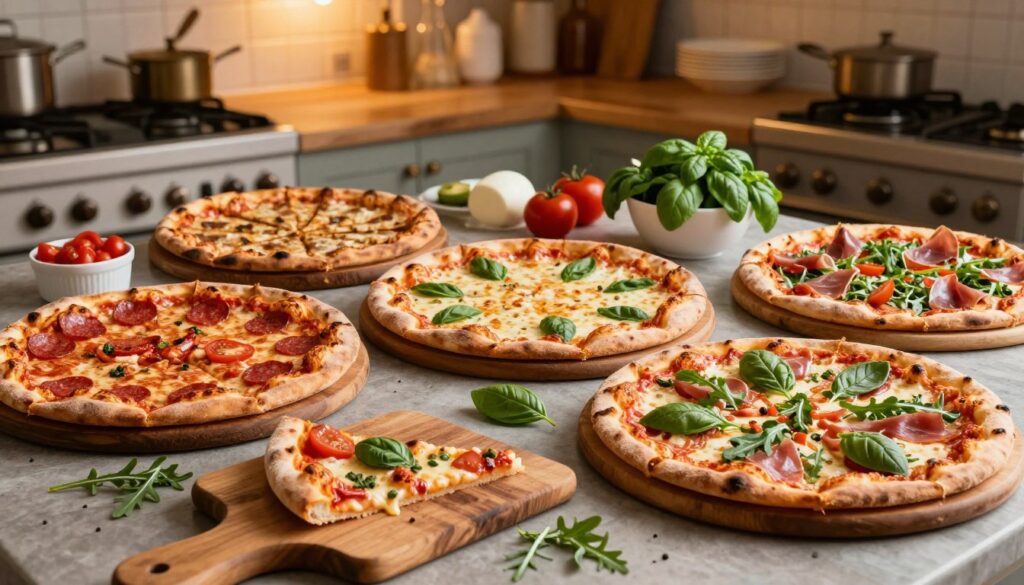
High heat + simple toppings is the rule. Use a very wet, short-handled dough ball, a thin layer of tomato, fresh mozzarella, and a basil leaf after baking.
Tip: Mimic a brick oven by preheating a steel or stone and finishing briefly under the broiler.
New York–style slices
Stretch thin for a foldable crust. Use low-moisture cheese and a modest sauce layer to charge even browning.
Slice large and serve by the hand for classic, shareable portions.
Detroit and Chicago pan methods
Use oiled, high-edged pans. For Detroit, press cheese to the edge so it caramelizes and creates a crispy rim.
For Chicago deep-dish, build layers—cheese first, then toppings, then a thicker sauce—so a heavy dish cooks through without a soggy base.
New Haven-style char and regional twists
Embrace char as a feature. Thin dough, intense heat, and quick bakes produce smoky spots that pair well with simple, punchy toppings like clams or sharp cheese.
“Regional chains and local pizza restaurants shape what Americans expect—recreating a favorite at home saves money and improves consistency.”
Pick your style by the numbers
| Style | Crust Thickness | Bake Time | Slice Structure |
|---|---|---|---|
| Neapolitan-inspired | Very thin center, airy edge | 90–120 sec (very hot) or 5–8 min at home | Soft, tender; single-serve pies |
| New York–style | Thin, flexible | 8–12 min at high temp | Large, foldable slice |
| Detroit / Chicago | Thick, pan-held | 20–30+ min (pan oven) | Square or deep slices, hearty |
| New Haven-style | Thin, blistered | 6–10 min at very high heat | Thin, slightly chewy slice with char |
Make Your Kitchen Run Like a Pizza Restaurant
Turn your kitchen into a streamlined bake line so weeknight meals feel effortless. A modest setup and steady timing keep batches flowing and stress low.
Prep station and workflow
Designate one counter for dough balls, another for toppings, and a clear launch zone by the oven. Portion dough in advance, jar or ladle your sauce, and shred cheese before service.
Pre-cook wet toppings and keep bowls of finished ingredients nearby. A well-dusted peel and a clean tray reduce sticking and speed transfers.
Serving like a pro
Let each pie rest 90 seconds before slicing so toppings settle and cheese firms. Use a sharp rocker or wheel for clean cuts and transfer slices to a cooling rack to stop steam from softening the crust.
Pro tip: Keep pies on wire racks at tables to preserve crispness instead of stacking on plates that trap moisture.
Menu thinking, scaling, and quick wins
Offer 2–3 default builds (classic, veggie, white) and a build-your-own table for picky eaters. Label slices for kids and ask a quick “herbs or no herbs?” like many pizzerias do.
| Scenario | How many pies | Table plan |
|---|---|---|
| Weeknight family | 1–2 pies for four | One launch zone, small topping bowls |
| Weekend group (6–8) | 3–4 pies | Two launch spots, extra cooling racks on tables |
| Feed a crowd (10+) | plan by number: 1 pie per 2 people | Stagger bakes; warm in oven on low if needed |
Compare home bakes to delivery and pickup: ordering makes sense for last-minute delivery or chains when you need many pies fast. Making at home wins on freshness, cost, and control—especially when you can batch prep dough or upgrade frozen pizzas with extra cheese, garlic, and finishing herbs.
“A little organization turns a chaotic night into a repeatable system that guests love.”
Conclusion
A few consistent choices—ferment time, sauce thickness, cheese moisture, oven heat, and topping balance—are the levers you control to make a better pie at home.
Homemade pizza can match or beat restaurants and pizza chains on flavor and easily outpace delivery on freshness and cost. As the industry shifts toward apps and higher prices, cooking at home is a practical, fun response.
Next pizza plan: pick one style, one sauce approach, one cheese blend, and one topping strategy. Repeat until it’s second nature. Keep a small notes log with key terms like hydration, proof time, and bake time.
Balance toppings, add veggies, and portion sensibly for better health. Want seasonal builds and troubleshooting? Subscribe to our newsletter for new ideas and quick fixes.